





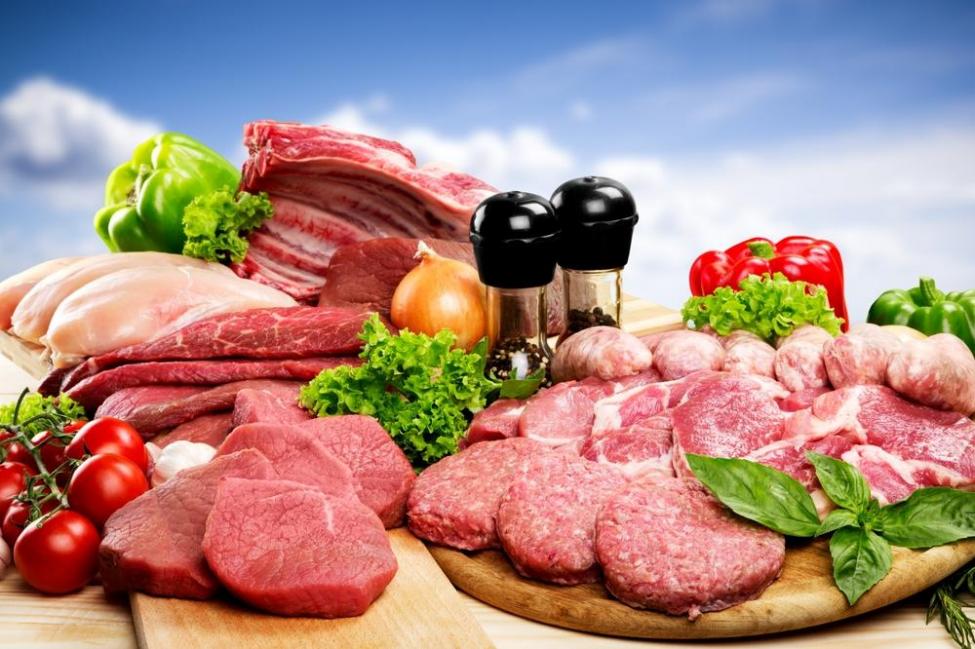
Au supermarché, face aux stratégies marketing de plus en plus agressives des différentes marques, il n’est pas facile de savoir ce qui est bon et sain pour notre corps. La plupart des produits sont chargés de produits chimiques pour répondre aux exigences de la production de masse, d’une durée de conservation plus longue et, bien sûr, d’économies de matières premières pour le producteur. Notre expert en musculation et coach en nutrition, David Costa, vous explique ce qu’il est important de savoir lorsque vous souhaitez acheter une source de protéines animales en présentant divers aliments courants.
Quelles sont les meilleures protéines animales au supermarché ? (résumé)
Top 5 imbattable : les œufs Bleu Blanc Cœur, le blanc de poulet (filet entier, pas le jambon), le fromage blanc 0 % et le petit suisse Yoplait 0 % (9,6 g protéines/100 g), les steaks hachés 5 % MG estampillés “100 % Muscle”, et le thon en conserve au naturel label MSC. À éviter : surimi, jambon de volaille industriel, cordons bleus avec moins de 40 % de viande. Coté budget, comptez environ 100€ par mois au supermarché.
Quelles protéines animales choisir pour bien manger et à quel prix ?
Question primordiale, combien vais-je dépenser par mois alimentaire pour acheter mes protéines au supermarché. Pour un homme de 80 kg consommant 160 g de protéines/jour, voici un budget mensuel optimisé en privilégiant les bonnes sources :
- 15 œufs/semaine (Bleu Blanc Cœur) : ~12 €/mois
- 2 kg de blanc de poulet : ~30 €/mois
- 4 kg de fromage blanc 0 % : ~20 €/mois
- 1,5 kg de steaks hachés 5 % : ~25 €/mois
- 1 kg de thon en conserve : ~15 €/mois
Total : environ 100 €/mois pour atteindre vos 160 g/jour de protéines de qualité, sans whey. Ajoutez 20-30 €/mois pour la whey isolat si vous en consommez.
💡 Voir mon guide whey concentré, isolat et hydrolysat pour optimiser ce budget car la protéine en poudre revient nettement moins chère pour votre apport en protéines prise de muscle ou sèche.
LES ŒUFS : La meilleure source de protéines du supermarché pour bien manger?
Les œufs, un aliment contenant des protéines animales très complètes et facilement digestibles. Ils contiennent de nombreux nutriments importants, dont les fameux oméga-3 ! Dans notre alimentation moderne, nous consommons trop d’oméga-6, des acides gras qui favorisent l’inflammation avec des conséquences néfastes pour la santé, et pas assez d’oméga-3.
✋ Il est recommandé de privilégier les aliments riches en oméga-3 pour rééquilibrer le tout. Oui, mais tous les œufs ne se valent pas :
-
✔️ La teneur en oméga-3 et oméga-6 d’un œuf est liée à l’alimentation de la poule. Si elle est engraissée au maïs, même s’il est bio, l’œuf sera plus riche en oméga-6.
-
✔️ La croyance commune selon laquelle les œufs de poules élevées en plein air ou bio sont meilleurs est donc à prendre avec des pincettes. Si cela est certes important pour le bien-être de la poule et l’impact environnemental, cela ne suffit malheureusement pas à garantir un meilleur rapport oméga-3/6 dans l’œuf.
-
✔️ Il existe un autre type d’œuf : l’œuf oméga-3 ! En France, vous pouvez le trouver sous le label BLEU BLANC CŒUR. L’alimentation des poules est enrichie en graines de lin (riches en oméga-3), ce qui rend leurs œufs plus riches en oméga-3 et moins riches en oméga-6.
-
✔️ Lors du choix des œufs, nous choisirons donc des “œufs oméga-3”, pour leurs bienfaits nutritionnels et issus de poules élevées en plein air ou bio, afin de favoriser des modes de production plus respectueux de la vie animale et de l’environnement.
-
✔️ Enfin, pour des œufs de moins de 9 jours après la ponte, optez pour les mentions “extra” ou “extra frais”.
⚠️ Attention aux autres allégations fantaisistes de certains industriels qui ne manquent pas d’air, comme “pondu du jour”, qui ne garantissent en rien la fraîcheur de l’œuf !

💡 Pour tout comprendre sur la création des coachings, l’adaptation de vos programmes, la nutrition flexible et découvrir des études de cas détaillées, lisez mon guide complet du coaching musculation et nutrition personnalisé à distance.
JAMBON DE VOLAILLE : contient-il assez de protéines ?
Le jambon de volaille est-il une bonne source de protéines animales ? Le “jambon” fait normalement référence à une partie de la cuisse du porc… il est déjà suspect qu’ils parviennent à en fabriquer avec de la volaille. Un nom plus approprié serait “dinde gorgée d’eau et d’additifs”.
En effet, il contient de la volaille, mais pas seulement ! Les industriels font un savant mélange pour vendre moins de viande, à un prix plus élevé :
-
❌ Il contient souvent des algues (carraghénanes) et de l’eau, qui servent à “lier” la viande malaxée mais aussi à la faire gonfler et donc à augmenter le volume, le poids et donc le prix.
-
❌ Il y a aussi parfois un ajout de protéines de soja moins chères.
-
❌ Pour le goût et l’aspect, un petit cocktail de sucre, sel, conservateurs et arômes.
-
❌ Un peu de caramel (Si, si !) sur le bord pour lui donner un aspect “rôti”.
-
❌ Comme tous les jambons, ils sont également pleins de nitrites, des substances à éviter.
Pour une moyenne de 15 €/kilo contre moins de 10 €/kilo pour un filet de poulet, on préfère sortir une poêle, votre santé vous remerciera.
Si les filets de poulet frais ne sont pas disponibles :
-
✔️ Choisissez les produits avec le plus haut pourcentage de volaille de source contrôlée.
-
✔️ Sans nitrites ajoutés.
-
✔️ Faible en sel.
-
✔️ Avec un minimum de sucre ajouté.

JAMBON DE PORC : UN ALIMENT RICHE EN PROTÉINES
C’est pratique, rapide, et on en trouve des dizaines de variétés dans chaque supermarché ; il y a tout simplement trop de choix. Mais si tout est bon dans le cochon, peut-on en dire autant du jambon ?
✋ Le jambon vendu par le boucher, est un peu gris, il s’effiloche, il est fibreux… pas très appétissant ? Et pourtant ! Plus le jambon est rose, lisse et brillant, plus il est plein d’additifs, de conservateurs et autres… cochonneries !
-
⛔ L’ennemi public numéro un ? Le nitrite de sodium (E250), qui est utilisé pour la conservation et pour fixer la couleur du jambon. Son rôle possible dans le cancer du côlon est débattu, mais tout le monde s’accorde à dire qu’une consommation élevée est nocive pour la santé !
-
✔️ Vérifiez également la teneur en sucre et en sel ; certains produits contiennent de grandes quantités de sirop de glucose et de sel pour améliorer leur goût.
-
✔️ Renseignez-vous sur l’origine de la viande : porcs élevés sans antibiotiques et nourris avec des aliments sans OGM, ou engraissés au maïs et au soja pour grossir plus vite. Attention, vous pourriez être surpris par la proportion de porc ! Par exemple, certaines marques de distributeurs ne contiennent que 82 % de jambon, ce qui signifie que 18 % sont des déchets/ajouts.

Découvrez les impressionnants résultats d’Armand, 49 ans, avec le coaching alimentaire personnalisé en 3 mois.

Vous voulez savoir quoi manger et en quelle quantité pour atteindre votre objectif de prise de muscle et perte de gras ?
Obtenez après analyse, votre plan alimentaire personnalisé en fonction de votre rythme de vie, besoins, préférences.
FROMAGE BLANC : UNE EXCELLENTE SOURCE DE PROTÉINES
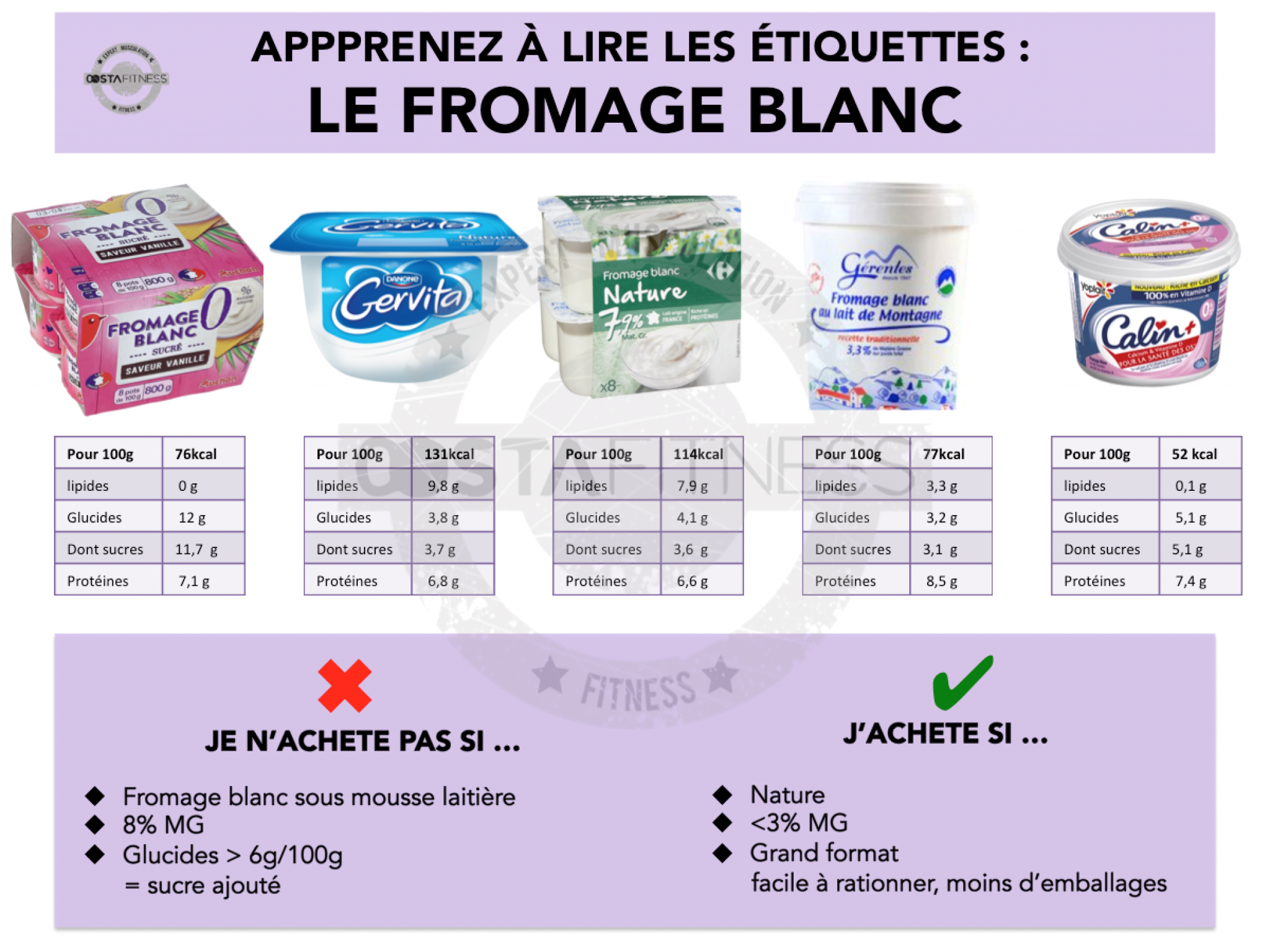
Le fromage blanc est un aliment de base pour les sportifs. C’est une excellente source de protéines, de calcium et de potassium. Il existe en différents pourcentages de matières grasses et, selon les marques, apporte entre 6,6 et 8,5 grammes de protéines pour 100 grammes.
-
✔️ La teneur en matières grasses varie selon qu’il est fabriqué à partir de lait entier, demi-écrémé ou écrémé. Avant 2007, le pourcentage de matière grasse sur extrait sec (calculé sur 100g de produit sans eau) était indiqué. Mais la teneur réelle en matières grasses du pot de fromage blanc que vous mangez est tout autre, car il contient plus de 80 % d’eau !
-
✔️ Aujourd’hui, le pourcentage de matières grasses est le plus souvent exprimé par rapport au poids total du produit fini. Par exemple, 40 % de MG sur extrait sec = 8 % de MG dans le produit fini. Un fromage blanc à 0 % contient 0,1 g de lipides pour 100 g.
✋ Évitez la variété à 8 % de MG, qui est plus calorique. 200 g de ce type de fromage blanc équivalent à 10 g de beurre. De plus, il contient des graisses saturées, qu’il vaut mieux remplacer par des graisses insaturées.
-
⛔ De même, évitez les textures de type mousse, les produits très gras et ceux contenant de la gélatine.
LE PORC : LA PROTÉINE ANIMALE LA MOINS CHÈRE ?
✋ Même les “moins mauvais” jambons industriels ne font pas le poids face à un bon vieux filet mignon de porc. Même si la différence en macronutriments est minime (plus de protéines animales et pas de glucides dans le filet), il ne faut pas seulement se concentrer sur le nombre de calories !
⚠️ En effet, si le filet de porc est un peu plus calorique et même un peu plus gras que le jambon industriel, il est nettement moins salé et surtout ne contient pas jusqu’à 27 % de composants chimiques comme le jambon sous cellophane.
-
✔️ Cela en fait un aliment plus sain. Le prix au kilo est également inférieur à celui du jambon produit industriellement !

LE STEAK HACHÉ : QUE VALENT CES PROTÉINES ?
C’est l’ingrédient roi de votre burger, mais pas seulement : c’est une source de vitamine B12, de zinc, mais surtout de fer et de protéines.
-
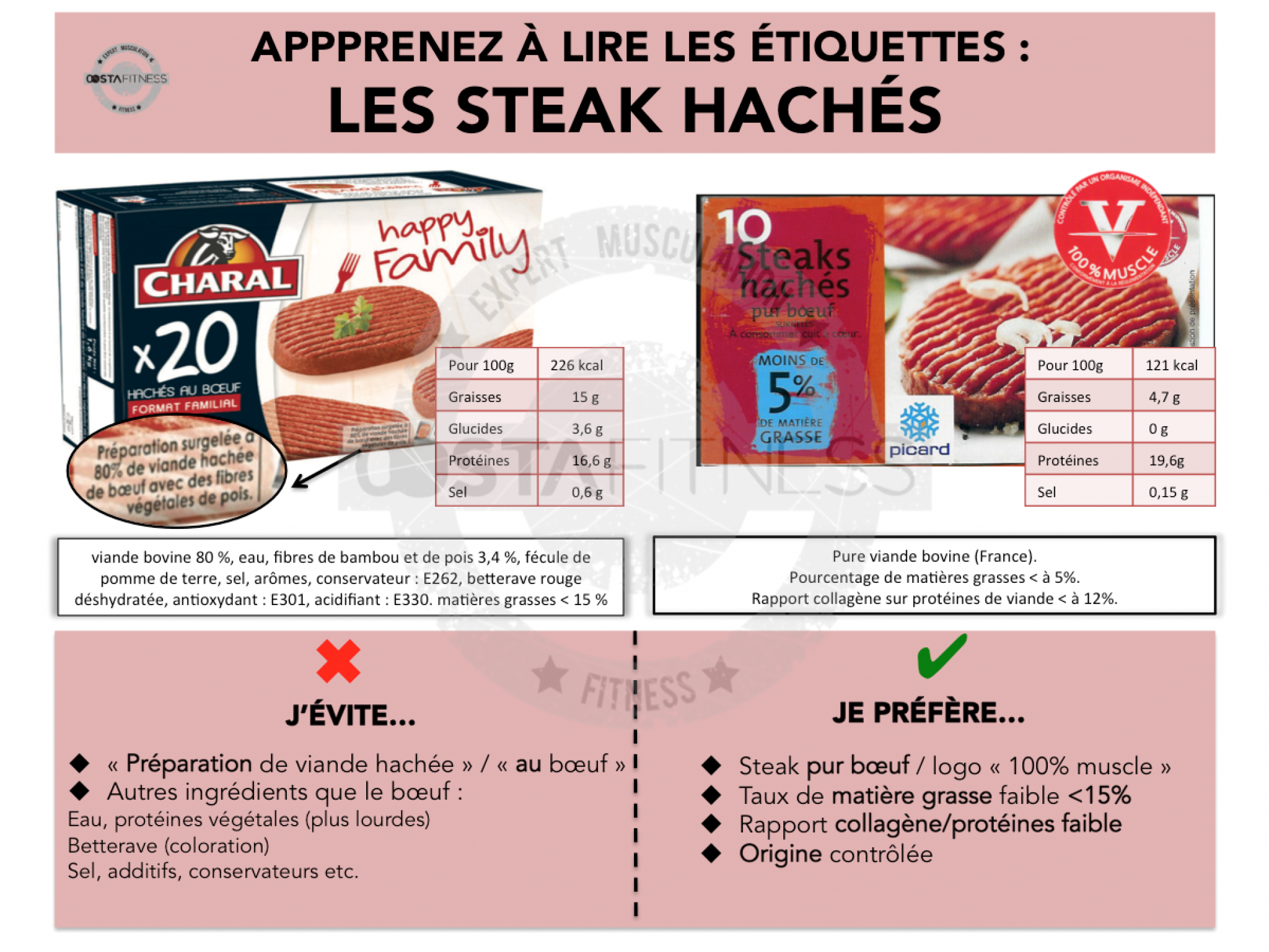
⛔ Attention : tous ne sont pas de bonne qualité, vérifiez bien les étiquettes pour voir les ingrédients ajoutés.
-
✋ Méfiez-vous des “préparations à base de bœuf” et “bœuf haché” : ces préparations moins chères sont un mélange de bœuf, d’additifs, de sel, de conservateurs, de protéines végétales (soja, amidon de pomme de terre, farine de pois, etc.) et de poudre de fibre de bambou, d’eau (pour augmenter le poids) et de poudre de betterave (pour la couleur).
-
✔️ Optez pour des steaks pur bœuf d’origine contrôlée. Vous pouvez les identifier grâce au logo rouge “100% MUSCLE”.
-
✔️ Pour limiter les mauvaises graisses, choisissez un pourcentage de matières grasses <15%. Idéalement 5% !
-
✔️ Le rapport collagène/protéines est également informatif… plus ce rapport est bas, meilleur est le produit (légalement <15%).
Vous voulez un plan alimentaire qui vous propose des sources variées de protéines ?
Mes plans nutritionnels personnalisés intègrent les meilleures sources de protéines selon votre budget et vos goûts.
LE THON EN CONSERVE COMME APPORT DE PROTÉINES A BON PRIX !
Le thon est un aliment intéressant car il est source de protéines, mais aussi de bonnes graisses très faciles à transporter.
-
✔️ Évitez les préparations en sauces, qui contiennent souvent plus de tomate que de thon.
-
✔️ Choisissez du thon au naturel et cuisinez-le vous-même avec un filet d’huile d’olive ou du citron.
-
✔️ Évitez les miettes de thon à l’huile qui absorbent plus d’eau et augmentent la charge calorique.
-
✔️ Préférez les boîtes indiquant le label MSC, l’agriculture biologique ou précisant “pêche à la ligne”, des méthodes plus respectueuses de l’écosystème.

CORDONS BLEUS : ATTENTION À BIEN CHOISIR !
Un repas facile à faire à la maison : blanc de poulet, jambon, fromage, chapelure et le tour est joué !
☢️ Cependant, les cordons bleus industriels ont une composition bien moins séduisante : ils affichent le plus souvent de longues listes d’ingrédients avec de nombreux additifs.
-
✔️ Vérifiez la teneur en viande ! La grande majorité est faite de “préparation de viande saumurée”. C’est du poulet ou de la dinde auxquels on ajoute des arômes, des émulsifiants, du sucre, etc., pour reconstituer une escalope.
-
⛔ De nombreuses marques ajoutent de la peau de poulet ou des protéines végétales (pois ou blé) pour réduire la proportion de viande.
-
✔️ La meilleure option est de choisir un cordon bleu composé à 100 % de filet de poulet ou contenant plus de 40 % de VIANDE. La teneur en protéines doit être supérieure à 15 g pour 100 g.

NUGGETS DE POULET : UNE BONNE PROTÉINE ANIMALE ?
Normalement, ce sont des morceaux de poulet enrobés de chapelure. Mais en réalité, les nuggets de supermarché ne contiennent souvent que 50 % de poulet, et pas toujours de bonne qualité !
-
✔️ Privilégiez les nuggets à base de filet de poulet plutôt que de viande reconstituée (peaux, eau, tendons).
-
✔️ Évitez ceux qui contiennent plus de graisses que de protéines.
-
✔️ Choisissez des nuggets sans sucres ajoutés (dextrose, etc.) et avec le moins d’additifs possible.

SURIMI : UNE SOLUTION POUR UN REPAS PROTÉINÉ ?
Le surimi ne remplace pas nutritionnellement un bon filet de poisson frais. Ces bâtonnets sont un mélange de poisson (congelé), d’eau, de blanc d’œuf, d’amidon de pomme de terre… et de sucre.
-
⛔ Un taux de glucides plus élevé que le taux de protéines – trouvez-vous cela normal pour du poisson ?!
-
✔️ Pour faire le plein de protéines animales et de micronutriments de qualité (comme la vitamine B12), choisissez un poisson blanc frais comme le cabillaud.

QUESTIONS FRÉQUENTES SUR LES MEILLEURES SOURCES DE PROTÉINES ANIMALES AU SUPERMARCHÉ !
Quelle est la meilleure protéine animale pour la musculation ?
Combien d'œufs par jour en musculation ?
Le jambon de volaille est-il une bonne source de protéines ?
Le fromage blanc 0 % est-il vraiment riche en protéines ?
Faut-il manger bio pour progresser en musculation ?
Progressez plus vite avec le meilleur du coaching à distance alimentaire sur mesure !
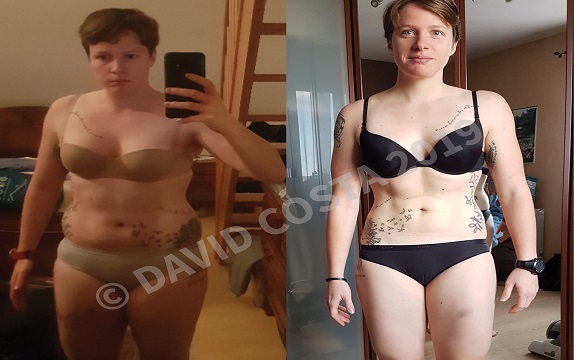
Pour réussir votre perte de poids ou votre prise de muscle, optez pour le coaching nutritionnel personnalisé de David Costa et obtenez votre plan alimentaire sur mesure adapté à vos besoins, vos contraintes et vos préférences. Découvrez les résultats de Leslie, 27 ans, avec -7 Kg et – 6 cm de tour de taille en 3 mois.
À propos de l’auteur David Costa
David Costa est coach sportif diplômé, l’un des plus qualifiés de France en programmes personnalisés de musculation. Master 2 STAPS, BEMF, Brevet d’État Haltérophilie-Musculation. Auteur de 4 livres aux Éditions Amphora dont Mon Coach Musculation (n°1 Amazon). Plus de 1000 transformations clients documentées depuis 2009.

