





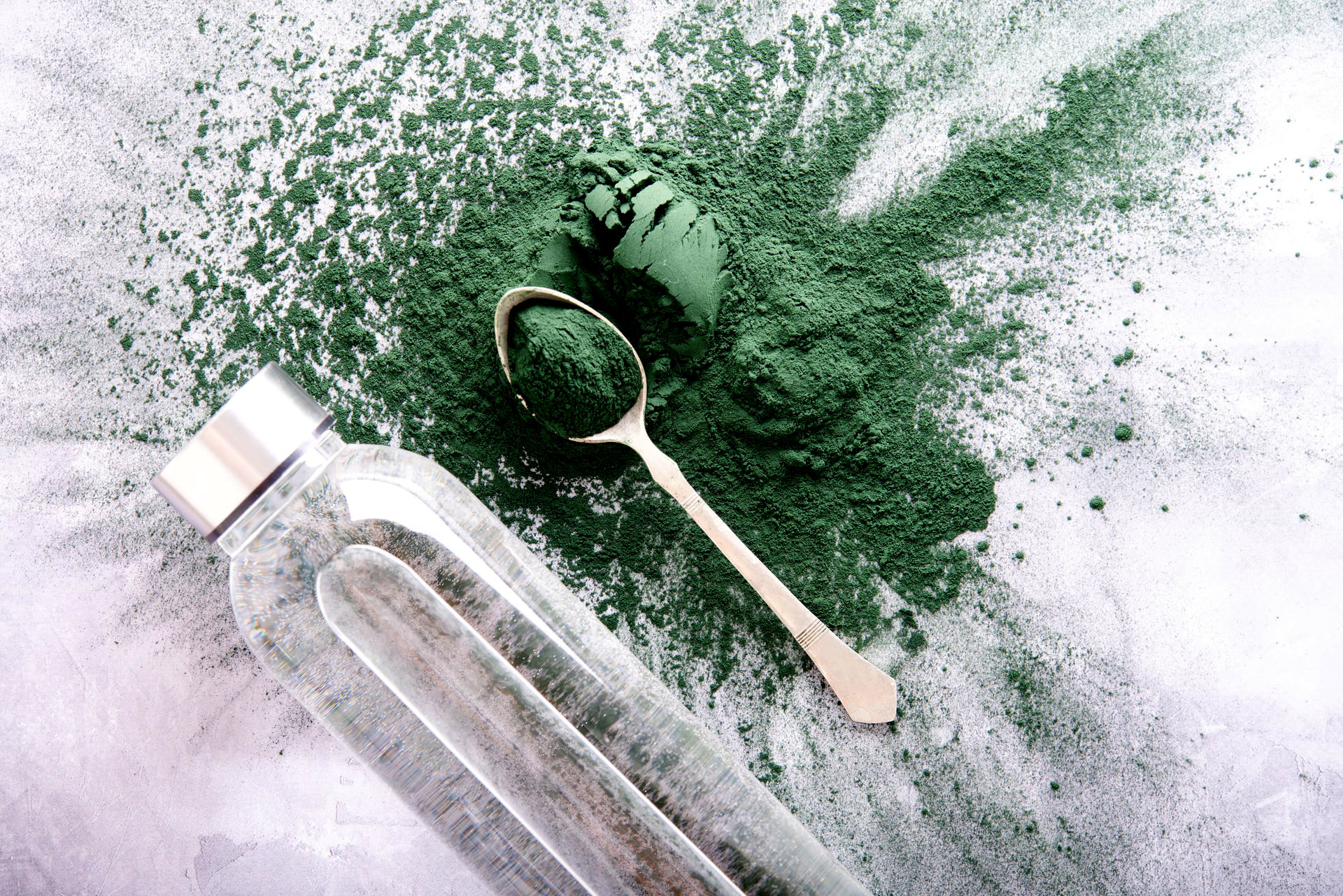
Spirulina is a microorganism that has existed for three billion years. The first traces of the cultivation of this superfood date back to accounts by the Spanish, who were astonished to discover that the Aztecs consumed a blue-green mud, which they even found delicious! It grows naturally in the warm waters of lakes in Mexico, Chad, and India. Once dried, it can be consumed in various forms to benefit from its numerous vitamins and minerals. What are the benefits of spirulina? How should it be consumed? Let’s find out.
A complete source of nutrients
Spirulina has been consumed for several hundred years, but it regained prominence when NASA researchers proposed it as a source of nutrients for astronauts. It is recommended to supplement with three grams of spirulina daily. This dose provides the following nutrients:
- 2 grams of protein
- 5% of the NRV* of vitamin B1
- 7% of the NRV of vitamin B2
- 2% of the NRV of vitamin B3
- 10% of the copper NRV
- 5% of the NRV of iron
- As well as small amounts of magnesium, potassium and manganese.
*reference nutritional value
Spirulina’s strength lies in the wide variety of nutrients it provides when consumed. It’s even considered one of the most nutritious foods on earth! So, the question arises: how does this contribute to improving athletic performance?
Benefits of spirulina on bodybuilding and sports
A closer look at physical activity
Spirulina has even more surprises in store! It acts as a powerful antioxidant, contributing to improved performance during physical activity. Spirulina helps achieve its goals in two key ways: firstly, its richness in nutrients facilitates recovery, and secondly, its abundance of antioxidants protects cells against the effects of free radicals, thus enhancing recovery after exercise. This makes spirulina an excellent ally for athletes.
Focus on mass gain
Spirulina has a remarkable protein content, up to 60% of its weight. In other words, 5 grams of spirulina contain as much protein as 20 grams of beef! However, there’s a catch that makes us realize this superfood can’t be our sole protein source for lean muscle gain . We would need between 80 and 100 grams of spirulina per day to get 50 grams of protein. That’s an average of 200 tablets per day to reach our Reference Intake (RI)!
Other virtues
In addition to its benefits for athletic performance, spirulina is described as a food with the following virtues:
- Weight loss
- Better digestion
- Better diabetes management
- Better blood pressure
- Better cholesterol management
- A reduction in the risk of heart disease
- An improvement in the immune system
- Better mental health
However, there is no miracle cure and taking spirulina as a food supplement can in no way replace a rich, healthy and balanced diet.
How to consume spirulina?
The two most common forms of spirulina are powder and tablets.
Spirulina powder can be consumed in the following ways:
- In a smoothie (which will give the drink a green tint)
- As a seasoning for salads and soups
- In fruit or vegetable juices
The second form remains the most practical as it simply involves ingesting 4 to 8 tablets per day. This can easily be done before a workout to improve recovery and provide a boost during the session.
In conclusion
Spirulina is a superfood that provides numerous nutrients to our bodies. Its benefits include improved athletic performance and enhanced recovery thanks to its blend of vitamins and minerals. It’s an excellent addition to supplementation. However, it cannot, on its own, guarantee good health, and it is strongly recommended to combine it with a balanced diet.

