





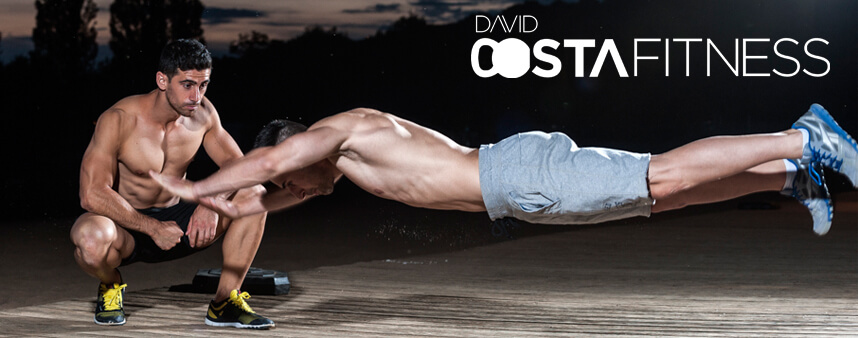
Among bodyweight exercises, there are certain variations that allow you to intensify the movements and have a significant impact on your physique! These very “American” versions of basic exercises are not yet widely used in the world of fitness or bodybuilding in Europe, except perhaps in the “GRITT Plio” classes from the LES MILLS brand or for the physical preparation of athletes.
I’ll explain how to train using the plyometric method with bodyweight exercises and offer you an intensive program!
Plyometrics: Physiology and Functioning
Simply put, plyometrics is a muscle contraction regimen that takes place under specific conditions. This involves rapidly alternating the stretching phase (eccentric contraction) and the contraction phase (concentric contraction) without a break in between. This is the case with every step you take when running, jumping, slamming into a volleyball, or throwing a javelin, stone, etc.
This rapid succession of movements will allow you to generate more force than a simple eccentric or concentric contraction. This is why, for example, you will jump higher by performing a squat followed by a jump than by performing a simple jump.
This increase in strength is due to the elasticity of the muscle-tendon system, which acts like a spring, storing energy during the eccentric phase and releasing it during contraction. The myotatic reflex (the reflex contraction of a muscle in response to a sudden stretch) also contributes to this increased strength.
Usefulness in training
Primarily used as a physical preparation method to develop strength and explosiveness in athletes, plyometrics is an extremely valuable tool for athletes of all types (with application adapted to the athlete’s level). It can be performed with bodyweight exercises or with weights in strength training. For example, in weightlifting, each “drop – catch – push” action represents a significant plyometric action with a load (clean or snatch).
To use this method, you will need to impart a sense of rebound (like a spring) and speed to your movements in order to achieve this increased force production. This offers several advantages:
- Mobilization of the entire body (I am excluding here any analytical type of movement)
- Coordination work
- Significant strain on core and abdominal muscles
- Stabilization work
- Managing the movement of one’s body in space
- High energy cost
When performing plyometric exercises with weights, safety and precise technique are essential, as the element of speed increases the risk of technical error. Choose full-body movements such as weighted pull-ups, bench press, overhead press, barbell rows, etc. To develop explosiveness, use loads of 50 to 60% of your 1RM. You can also work with higher percentages (80-85%) for strength gains.
For bodyweight exercises, it is beneficial to perform them in a circuit to achieve a physical conditioning workout based on high-intensity movements, as I suggest below!
My training program
I’m sharing this training video with my brother Vincent.

Before each session, perform a complete warm-up based on core strengthening exercises and the circuit exercises performed slowly and with control.
Circuit 1 : 4 exercises in succession, 2 minutes rest. Repeat 3 to 5 times.
Core strengthening with tucked jumps x 10
Pumps broken x 10
Pronated/supinated grip pull-up with bar drop x 10
Alternating jumping lunges x 10 per leg
Circuit 2 : 4 exercises in succession, 2 minutes rest. Repeat 3 to 5 times.
Plank with lateral jumps x 20
Jumping triceps push-ups x 10
Supinated/pronated pull-up with bar release / Keeping x 10
Jump squat with movement x 10
For more advice, check out my complete e-book on bodyweight training .
Find me on Facebook for more sports information and check out my Instagram profile (@davidcostacoach) to follow me daily.

